이 글은 그렉 누콜 스쿼트 가이드의 일부를 번역한 글입니다.
How to Squat: The Descent
스쿼트 하강 방법
2.Speed of Descent
하강의 속도
The next key factor is speed of descent.
다음의 주요 열쇠는 하강의 속도다.
In general, your best bet is to descend as fast as possible while remaining in complete control of the bar.
일반적으로 가장 좋은 것은 바를 완전히 제어한 채로 가능한 빨리 하강하는 것이다.
A faster descent can help you get a little more “bounce” out of the bottom of the squat via the stretch reflex (when your muscles stretch quickly, they naturally contract with a bit more force for a moment when you reverse the movement), but a little extra pop isn’t very helpful if you’re loose and out of control when you hit the hole.
빠른 하강은 최하단 구간에서 신장반사(너의 근육이 빠르게 늘어났을 때, 너가 너의 움직임을 반전시키면 빠르게 늘어난 근육들은 자연스레 조금 더 많은 힘을 가지고 수축한다.)를 통해 더 많은 “튕김“을 얻을 수 있다. 하지만 만약 너가 느슨해졌고 홀에 다다랐을 때 조절하는 것이 불가능하다면 이 약간의 튕김은 그다지 도움이 되지 않는다.
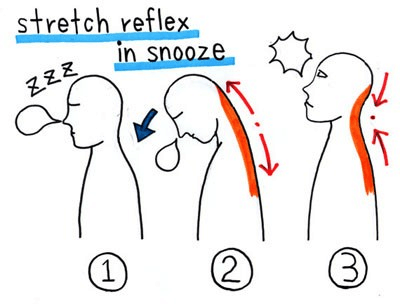
신장반사의 예시
3.Depth
깊이
The final issue for the descent is … when do you stop descending?
하강에 대한 마지막 주제는 ”너가 언제 하강을 멈추는가.“이다.
My simple answer: At the bottom. As low as your body will let you go. However, be aware that there’s some variability in the depth people can achieve. Compare my rock-bottom position to my wife Lyndsey’s.
이것에 대해 간단하게 답변하자면 ”너의 몸이 허락하는 한 가능한 한 아래에서 멈추라“이다. 하지만 사람들이 성취할 수 있는 깊이에는 약간의 변수가 존재함을 알아야 한다. 나와 내 아내인 Lyndsey의 최하단에서의 포지션을 비교해 봐라.
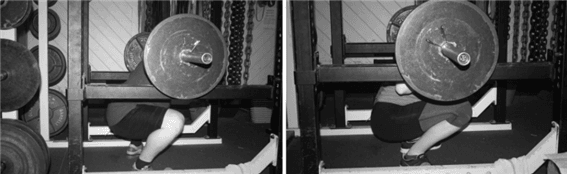
Greg과 Lyndsey의 최하단 포지션 비교
Some people are concerned that deep squats will injure their knees or their back, so they squat high and cut their squat off as soon as their torso starts inclining forward ever so slightly. However, the most thorough review of the scientific literature found that deep squats posed no serious risks to the knees or spine. The loads on your knees and spine can certainly get very high with heavy, deep squats, but your body isn’t fragile. Your tendons, ligaments, and spinal discs are primarily made of collagen: a tissue which borders on ludicrously strong and durable. The demands on those tissues in a deep squat are well below the maximum that those tissues can withstand (assuming you don’t have pre-existing knee or spine issues), and they remodel, grow, and get stronger in response to training, just like your muscles do (albeit at a slower pace).
몇몇 사람들은 풀스쿼트(deep squats)가 그들의 무릎이나 등에 부상을 유발할까 걱정해서 스쿼트를 할 때 그들의 몸통이 약간이라도 앞으로 기우는 순간, 그 이상 깊이 내려가는 것을 멈춘다. 하지만 과학 문헌들을 빈틈없이 검토한 결과 풀스쿼트는 무릎이나 척추에 심각한 부담을 가하지 않는다는 것을 알아냈다. 무릎이나 척추에 가해지는 부하는 무겁고 풀스쿼트로 분명히 강해질 수 있다. 하지만 인간의 몸은 그렇게 연약하지 않다. 너의 건, 인대 그리고 척추의 디스크는 (더럽게 세고 내구성이 강한 조직인)콜라겐을 주성분으로 하여 구성된다. 풀스쿼트에서 발생하는 이 조직들에 대한 요구는 무릎이나 척추에 문제가 없다고 가정했을 때 이 조직들이 견뎌낼 수 있는 최대치보다 훨씬 낮고, 이 조직들은 너의 근육처럼 훈련에 반응해 비록 느린 속도 일지라도 개조되고, 성장하고, 강해진다.
Deep squats help you gain more strength and muscle than shallow squats, and they transfer better to most athletic endeavors (even vertical jumping, which actually mimics the half squat more so than the deep squat).
풀스쿼트는 얕게 앉는 스쿼트보다 더 많은 힘과 근육을 얻게 도와주며 다른 운동에 대한 전이성이 더 크다.(심지어 풀스쿼트보다 하프 스쿼트와 더 비슷한 모습을 가진 서전트 점프에도 말이다.)

서전트 점프와 하프스쿼트의 자세 대조
If you’re going to squat deep, then you may as well go until you bottom out. Not only do you get the benefits of increased range of motion, but most people find they can actually lift more weight.
만약 너가 더 깊게 스쿼트를 하고 싶다면, 끝날 때까지 깊이 앉는 것이 좋다(you may as well go until you bottom out). ROM의 증가로 인한 이득을 얻을 수 있을 뿐만 아니라 대부분의 사람들은 실제로 더 많은 중량을 들어올릴 수 있다는 것을 발견한다.
Most people’s sticking point in the squat (the point where the bar slows down dramatically, and the point where most people miss a squat that’s too heavy) is a little bit above parallel. If you’re squatting at least to parallel, the hardest point of the lift won’t be your bottom position. It will be midway up, so you aren’t making the lift any harder by sinking a couple of inches deeper.
대부분의 사람들이 가진 스쿼트에서의 스티킹 포인트(바가 급격히 느려지고 너무 무거워서 스쿼트를 실패하는 지점)는 페러럴 스쿼트보다 살짝 높다. 만약 너가 최소한 평행한 깊이로 스쿼트를 한다면 스쿼트의 가장 어려운 부분은 바텀 포지션이 아닐 것이다. 그 지점은 중간 즈음에 있을 것이고, 너는 2인치 더 깊게 앉는 것으로 리프팅을 더 어렵지 않게 만들 것이다.
When you squat until your hips stop you or until your hamstrings bounce off your calves, you’ll get that bounce out of the hole that I mentioned before, which will help you in reversing the load so you’ll have more momentum built up when you reach the sticking point. Most people find that if they bottom out 2 inches below parallel, it’s a lot easier to complete the lift if they go 2 inches below parallel rather than cutting the squat right at parallel.
너가 엉덩이가 멈출 때까지, 혹은 햄스트링이 종아리에 튕길 때까지 앉으면 내가 이미 언급했던 것 처럼 홀에서 튕겨져 나오는데, 이러면 부하를 반전시키는데 도움을 주기 때문에 스티킹 포인트에서 더 많은 탄력을 받을 수 있다. 많은 사람들이 스쿼트를 할 때 페러럴 스쿼트보다 2인치 아래로 내려가는 것이 페러럴 스쿼트까지만 내려가는 것보다 리프팅을 성공시키는데 훨씬 더 쉽다는 것을 발견했다.
When you cut a squat higher than your natural bottom position, assuming you’re still squatting to some position below your sticking point, you have to reverse the weight purely with active muscular effort instead of also getting a boost from your stretch reflex and the passive contractile properties of your muscles that kick in as they stretch. The advantage you gain from decreasing your range of motion is generally outweighed by the additional effort it takes to reverse the load without the aid of the bounce.
너가 너의 자연적인 바텀 포지션에 도달하기 전에 스쿼트를 멈추었을 때, 너의 포지션은 여전히 스티킹 포인트보다 아래에 있다고 가정한다면 너는 신장반사와 근육이 늘어났을 때 생기는 수동적인 수축성의 성질 없이 오로지 능동적인 근육의 활동으로만 중량을 반전시켜야 한다. 너의 ROM을 줄임으로써 얻는 장점은 일반적으로 탄력(튕김)의 도움 없이 부하를 반전시키는데 들어가는 부가적인 노력보다 더 크다.
On top of the advantage you get from the bounce, there’s an additional advantage to a higher bottom position: you’re catching the bounce closer to your sticking point. Your sticking point is going to come at the same point in the lift (a bit above parallel) no matter how deep you go, so if you can catch the bounce just below parallel, you can ride it through the start of the ascent and still have more momentum left when you reach the sticking point.
튕김에서 얻을 수 있는 장점 외에도 '튕김'을 스티킹 포인트에 가깝게, 즉 일반적인 위치보다 더 높게 잡은 바텀 포지션에는 부가적인 장점이 있다. 너가 얼마나 깊게 스쿼트를 하던지 너의 스티킹 포인트는 항상 같은 지점에 있어(페러럴 스쿼트의 약간 위) 페러럴 스쿼트의 바로 아래에서 ’튕김‘을 잡을 수 있다면 너는 이것을 타고 오르막길의 시발점을 지나갈 수 있고 너가 스티킹 포인트에 도달해도 아직 더 많은 탄력이 남아있다.
If
you’re a powerlifter, there are some tweaks you can try that will let
you take advantage of that bounce while being able to naturally have a
higher bottom position: below parallel, but not deeper than is
necessary for a competition.
너가 파워리프터라면 이 튕김을 활용할 수 있는 몇 가지의 방법들을 시도할 수 있고 동시에 페러럴 스쿼트보다 낮지만 경기에 필요한 것보다는 깊지 않게 바텀 포지션의 위치를 높일 수 있다.
1.As
mentioned previously, if you can get really deep when sitting down into
the squat, try sitting back instead. You’ll reach full hip flexion
higher, and naturally limit your range of motion a bit.
1.이전에 언급했듯이 너가 싯다운 큐잉을 사용한 스쿼트에서 정말 깊게 앉을 수 있다면 싯백 큐잉을 시도해봐라. 고관절 굴곡의 최대 지점이 높아질 것이고, 자연스레 ROM은 약간 제한될 것이다.
2.Try
widening your stance out a bit more. The wider your stance gets, the
higher your bottom position will get. Find the stance width that still
lets you break parallel, but that doesn’t let you go much past parallel.
2.너의 스탠스를 약간 넓혀봐라. 스탠스가 넓어질수록 너의 바텀 포지션도 올라갈 것이다. 패러럴 스쿼트보다 깊게 내려갈 수 있지만 많이 지나치지는 않는 스탠스를 찾아라.
3.Intentionally
arch your low back harder. This will put your pelvis in anterior tilt,
so you’ll already be starting the lift in a bit more hip flexion.
3.고의로 너의 허리를 강하게 구부려라. 이것은 너의 골반을 전방경사 시켜서 조금 더 고관절의 굴곡으로 리프트틀 시작하게 해준다.
4.If
you generally high bar squat, give the low bar squat a try. Since the
bar is lower on your back, you’ll naturally have to lean farther forward
to keep your center of mass over mid-foot. Like the other three tips,
this will let you reach full hip flexion at a slightly higher depth.
4.너가 기본적인 하이바 스쿼트를 하고 있다면 로우바 스쿼트를 시도해봐라. 바가 등에 더 낮게 위치해 있어 너는 무게중심을 미드풋에 놓기 위해 자연스레 몸을 앞으로 기울일 것이다. 이 방법은 다른 세 가지 방법들과 마찬가지로 너가 스쿼트를 할 때 약간 더 높은 곳에서 고관절 굴곡이 최대치에 도달할 수 있게 해 줄 것이다.
If
you try these tips and they don’t click for you, that’s perfectly fine!
The advantage you get from being able to bottom out while still
cutting your squat a little higher is a small one in the first place – just look at weightlifters who still squat a ton while going super deep. However, these are all tips worth experimenting with.
만약 너가 이런 팁들을 시도했는데 이 방법들이 너와 맞지 않는다 해도 괜찮다. 스쿼트를 조금 더 높은 위치에서 끊으면서 스쿼트를 끝낼 수 있다는 것에 대한 장점은 애초에 아주 작은 것이다. 아주 깊게 스쿼트를 하면서 매우 무거운 중량을 다루는 역도 선수들을 보라. 하지만 그렇다고 해도 이 팁들은 시도할 가치가 있다.
ps.외국 글을 번역하면서 힘들었던 것이 영어를 그대로 직역하자니 언어나 문화의 차이로 인해 글을 이해하기가 힘들고, 그렇다고 의역을 하자니 대명사나 그 밖에 생략된 부분에 대한 것 등을 의역할 때는 제 사견이 첨가될 수 밖에 없어서(필자에게 이건 무슨 뜻으로 쓴 거냐고 하나하나 물어볼 수는 없는 관계로) 혹여나 본래의 의미와 완전 다른 의미가 될까봐 둘을 절충해서 쓰고 있는데 그 비율을 맞추기가 어렵네요. 제가 지금까지 올린 글들을 보시면 아시겠지만 제가 의역의 비율을 높여서 번역한 것도 있고, 직역의 비율을 높여서 번역한 것도 있는 등 역체가 일정하지 않고 들쑥날쑥한데, 오역의 가능성을 최대한 낮추면서 가독성을 떨어뜨리지 않게끔 직역과 의역이 글에서 차지하는 적절한 비율을 찾는 것을 목표로 실험을 하는 중이라 그렇습니다. 아마 좀 더 내공이 쌓여서 그 황금비율을 찾을 때까진 계속해서 들쑥날쑥할겁니다.








댓글 영역